
Specialised Surgical Procedure
Whipple Procedure(Pancreaticoduodenectomy)
The Whipple procedure is the most commonly performed operation for cancers and selected benign diseases involving the head of the pancreas, bile duct, ampulla, and duodenum. It is a highly specialized operation that offers the best chance of long-term survival for carefully selected patients.
With advances in surgical techniques, anesthesia, intensive care, and enhanced recovery pathways, the Whipple procedure can now be performed safely in experienced HPB centers.
Overview
What Is the Whipple Procedure?
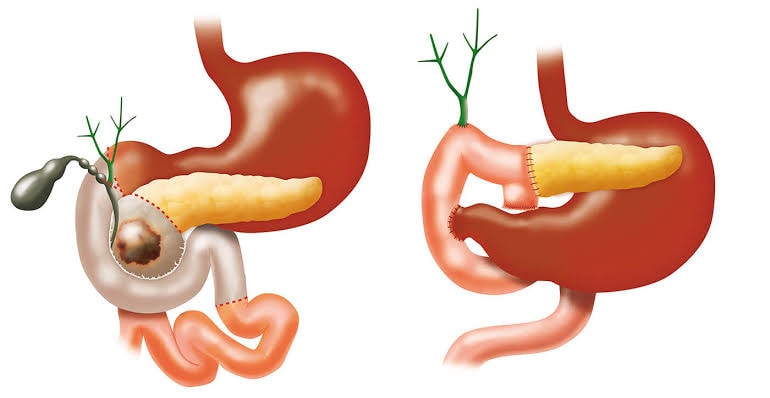
The Whipple procedure (pancreaticoduodenectomy) removes the diseased portion of the pancreas together with nearby organs that share the same blood supply.
The operation typically removes:
- Head of the pancreas
- Duodenum
- Gallbladder
- Distal bile duct
- Small portion of stomach (when required)
Organs preserved:
- Liver
- Remaining pancreas
- Spleen
- Colon
Digestive Tract Reconstruction
After removal, the digestive tract is reconstructed to restore the normal passage of food, bile, and pancreatic enzymes.
Remaining Pancreas
Small intestine — Pancreaticojejunostomy
Bile Duct
Small intestine — Hepaticojejunostomy
Stomach
Small intestine — Gastrojejunostomy
Indications
When Is the Whipple Procedure Recommended?
Pancreatic Cancer
Most common indication for the procedure.
Ampullary Cancer
Cancer arising at the ampulla of Vater.
Distal Cholangiocarcinoma
Cancer of the lower bile duct.
Duodenal Cancer
Selected tumors of the first or second part of the duodenum.
Neuroendocrine Tumors
Selected pancreatic neuroendocrine tumors.
Large Precancerous Cysts (IPMN/MCN)
Selected high-risk precancerous lesions.
Chronic Pancreatitis
Occasionally for severe disease with disabling symptoms.
Planning
How Is Surgery Planned?
Every patient is discussed within a multidisciplinary cancer team before any surgical decision is made.
Clinic Assessment
CT Pancreas Protocol
MRI / MRCP (selected patients)
Endoscopic Ultrasound (when indicated)
Multidisciplinary Team Discussion
Optimization Before Surgery
Whipple Procedure
Surgical Approaches
Surgical Approaches
The choice depends on tumor location, vascular involvement, patient health, and surgeon expertise.
Open Whipple Procedure
Most widely performed. Ideal for many pancreatic cancers.
Laparoscopic Whipple
Suitable for carefully selected patients. Performed in specialized centers.
Laparoscopic Whipple
Enhanced precision and visualization. Available for selected patients.
During the Operation
Stages of the Operation
The operation typically takes several hours and is tailored to the patient's anatomy and disease.
Recovery
Recovery After Surgery
Enhanced recovery pathways encourage early walking, pain control, and gradual return to eating.
Surgery
Day 0
Recovery Room / ICU
Day 1
Early Mobilization
Day 2–3
Gradual Diet
Day 3–5
Hospital Discharge
Day 7–10
Clinic Follow-up
Week 4–6
Recovery at Home
4–8 weeks
Possible Risks
Possible Complications
Careful surgical technique, experienced teams, and standardized postoperative care help reduce these risks.
Pancreatic Fistula
Leak from the pancreatic anastomosis — managed conservatively in most cases.
Delayed Gastric Emptying
Relatively common, improves with time.
Bleeding
Rare in experienced specialized centers.
Infection
Treated with antibiotics or drainage.
Bile Leak
Uncommon, usually managed conservatively.
Pancreatitis
Inflammation in the remaining pancreas.
Blood Clots
Prevented by early mobilization and prophylactic medication.
Temporary Digestive Changes
Improve as the body adapts over time.
Diabetes (selected patients)
Occurs in some patients after surgery.
Treatment Journey
Your Pancreatic Cancer Treatment Journey
Surgery is one component of a comprehensive, multidisciplinary pancreatic cancer treatment pathway.
Diagnosis & Imaging
Multidisciplinary Tumor Board Review
Assessment of Resectability
Neoadjuvant Chemotherapy (when appropriate)
Whipple Procedure
Enhanced Recovery (ERAS)
Pathology Review
Adjuvant Chemotherapy (if indicated)
Long-Term Follow-up
After Surgery
Life After a Whipple Procedure
Nutrition
Small frequent meals. Dietitian support when needed.
Pancreatic Enzymes
Some patients require enzyme replacement to aid digestion.
Blood Sugar
Monitor glucose levels after surgery.
Physical Activity
Gradual return to normal activity.
Follow-up
Regular clinic visits and imaging when appropriate.
FAQ
Frequently Asked Questions
Why Prof. Walid?
Why Choose Prof. Walid Elmoghazy?
Senior Consultant in Hepatobiliary & Pancreatic Surgery
Clinical Lead of Liver Surgery & Liver Transplantation
International fellowships: Kyoto University (Japan), Queen Elizabeth Hospital (UK), University of Alberta (Canada), Institut Mutualiste Montsouris (Paris)
Experience in more than 1,000 major HPB operations
Expertise in pancreatic cancer surgery and complex pancreatic resections
Advanced laparoscopic pancreatic surgery
Multidisciplinary pancreatic cancer care
Second Opinion
Request a Second Opinion
If you have been diagnosed with pancreatic cancer or advised to undergo a Whipple procedure, an expert review of your imaging and medical records can help confirm the diagnosis and determine the most appropriate treatment strategy.
Patients may securely upload:
- CT Pancreas Protocol
- MRI / MRCP
- PET-CT (if available)
- Endoscopic Ultrasound Report
- Biopsy Report
- Blood Tests (including CA 19-9)
- Previous Medical Records
Considering a Whipple Procedure?
Pancreatic cancer treatment requires careful planning and a multidisciplinary approach. An individualized assessment helps determine whether surgery, chemotherapy, or a combination of treatments offers the best chance of success.